
The architectural landscape of the United Kingdom is undergoing a quiet revolution as more homeowners and developers move away from traditional heating methods. Central to this change is the adoption of integrated floor heating systems, which offer a seamless way to warm a property while maximising interior space. Unlike old fashioned radiators that occupy valuable wall real estate and create uneven temperature zones, these sophisticated systems are embedded within the floor structure. This creates a large radiant surface that distributes heat evenly across every square inch of a room. By choosing a solution that integrates directly with the subfloor and screed, you ensure that your home remains warm, stylish, and highly efficient.
At DUO Systems, we believe that the true value of integrated floor heating systems lies in their ability to blend technical performance with aesthetic freedom. These systems are designed to be invisible, operating silently beneath your chosen floor finish to provide a gentle and natural warmth. Whether you are working on a high end self build, a commercial development, or a residential extension in Hampshire, the move toward integrated technology represents a significant upgrade. It is not simply about replacing a boiler or a radiator; it is about rethinking how a building manages energy and comfort from the ground up.
The Science and Benefits of Radiant Heating
Understanding why integrated floor heating systems are superior to traditional convection heating requires a look at the physics of heat transfer. Radiators work by heating the air immediately around them, which then rises to the ceiling before cooling and falling back down. This creates a cycle that often leaves the floor area feeling cold while the unused space near the ceiling is unnecessarily warm. In contrast, radiant systems heat the floor itself, which then warms the objects and people in the room directly. This creates a more natural “feet warm, head cool” environment that human beings find inherently more comfortable.
Energy efficiency is another area where these systems excel. Because they cover the entire floor area, they can operate at much lower water temperatures than radiators. While a typical radiator might require water to be heated to 75 degrees Celsius, integrated floor heating systems can often achieve the same level of comfort with water at just 35 to 45 degrees. This makes them the perfect partner for modern, low carbon heat sources such as air source heat pumps. By reducing the temperature gradient required, you significantly lower the energy demand on your property, leading to lower monthly bills and a reduced environmental impact.
Furthermore, the integration of the heating system into the floor structure eliminates the circulation of dust and allergens. Radiators create air currents that can lift particles and move them around the living space, which is a common trigger for those with allergies or respiratory issues. Radiant heat is static and silent, providing a cleaner atmosphere for your family. When you invest in integrated floor heating systems, you are choosing a solution that prioritises the health and wellbeing of everyone in the building.
Designing the Perfect Integrated System
A successful installation begins long before a single pipe is laid. It starts with a comprehensive design process that takes into account the unique thermal characteristics of the building. At DUO Systems, we provide detailed heat loss calculations and bespoke CAD designs to ensure that every circuit is perfectly sized for its intended purpose. This level of planning is essential for integrated floor heating systems to function as intended. We consider factors such as window sizes, ceiling heights, and the specific insulation values of the walls to determine exactly how much energy is needed to keep each room at the ideal temperature.
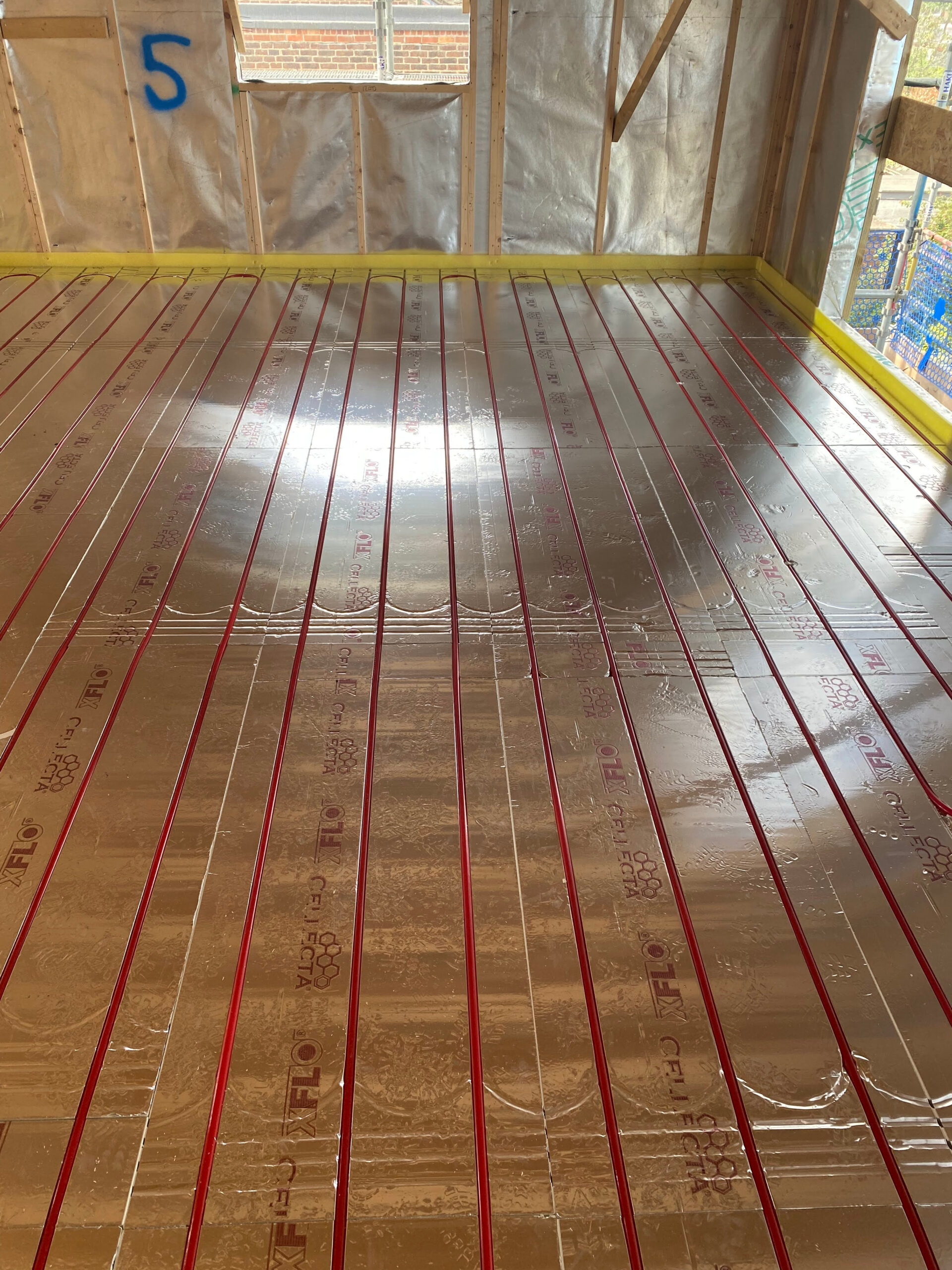
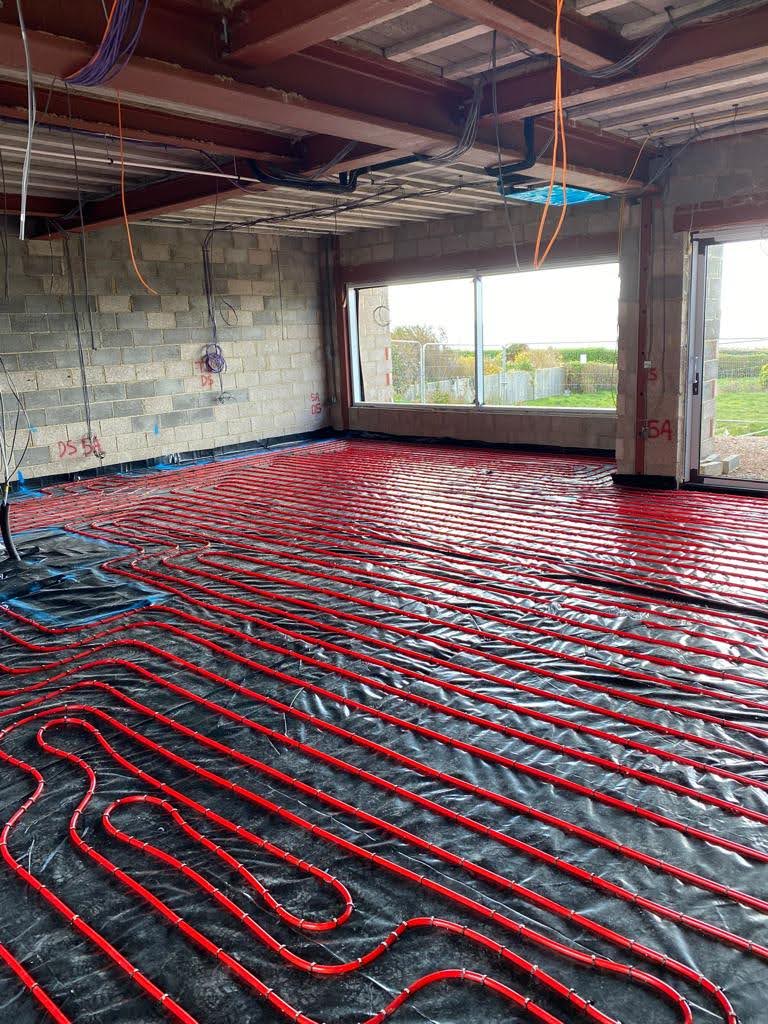
The “integration” aspect of these systems refers to how the heating loops interact with the various layers of the floor. This includes the damp proof membrane, the insulation boards, and the final screed layer. Every component must work in harmony to ensure that the heat moves upward into the room rather than being lost into the ground. Professional design also involves strategic “zoning,” allowing you to control different areas of your home independently. This means you can keep your bedroom cool for better sleep while ensuring the bathroom is warm and inviting for your morning routine.
Choosing high quality materials is equally important for the longevity of the system. We use durable, cross linked polyethylene pipes that are designed to last for the lifetime of the building. These pipes are installed in continuous loops with no joints beneath the floor surface, virtually eliminating the risk of leaks. By focusing on a “total floor zone” approach, DUO Systems ensures that the integrated floor heating systems we install are robust, reliable, and capable of meeting the demands of modern living.
The Role of High Performance Liquid Screeds
The screed layer is arguably the most critical component of an integrated system, as it acts as the primary conductor for the heat. Traditional sand and cement screeds are often thick and contain tiny air pockets that act as insulators, hindering the transfer of warmth. To combat this, we recommend the use of high performance liquid or flowing screeds. These materials are poured in a liquid state, allowing them to flow around the heating pipes and create a solid, void free mass. This ensures maximum thermal conductivity and a more responsive heating experience.
Because liquid screeds are more efficient at conducting heat, they can often be poured at a thinner depth than traditional alternatives. This is a major advantage for integrated floor heating systems, especially in renovation projects where floor heights are a concern. A thinner screed layer means the floor will heat up more quickly and react faster to changes in your thermostat settings. It also provides a perfectly level surface that is ideal for high end floor finishes like large format tiles or luxury vinyl.
The combination of professional pipe layout and advanced screeding creates a thermal mass that holds onto heat long after the system has been turned off. This “flywheel effect” helps to maintain a stable temperature in your home throughout the day, preventing the sharp peaks and troughs in warmth that are common with traditional central heating. When you choose an integrated approach, you are effectively turning your entire floor into a giant, efficient storage heater.
Selecting the Ideal Floor Finish
One of the most common questions we receive is whether integrated floor heating systems will work with specific types of flooring. The good news is that these systems are remarkably versatile. Stone and ceramic tiles are the gold standard for thermal performance because they conduct and retain heat exceptionally well. They feel wonderfully warm underfoot and help the system operate at its most efficient. However, they are far from the only option available to modern homeowners.
Engineered wood is a popular choice for those who want the look of natural timber without the risk of warping. Unlike solid wood, engineered planks are constructed in layers that provide stability during temperature changes. When paired with integrated floor heating systems, they provide a warm, comfortable surface that adds a touch of luxury to any room. It is important to ensure that the wood is sourced from a reputable manufacturer and that the installation includes a floor sensor to prevent the surface from becoming too hot.
If you prefer the soft feel of carpet, you can still enjoy the benefits of radiant heat. The key is to select a carpet and underlay with a combined “tog” rating of 2.5 or less. This ensures that the heat can effectively penetrate the fabric and warm the room. Many modern LVT (Luxury Vinyl Tile) products are also designed specifically for use with underfloor heating. These materials are thin and highly conductive, making them a practical and stylish choice for kitchens, bathrooms, and hallways alike.
Professional Commissioning and Aftercare
The final step in the journey is the professional commissioning of the system. This is a delicate process that involves pressure testing the pipework to ensure total integrity before the floor is finished. Once the screed has reached the correct level of moisture, the system is slowly introduced to heat. This gradual warm up procedure allows the building materials to expand and settle naturally, preventing any cracking or structural issues. At DUO Systems, we provide a full handover to every client, explaining how to use the controls and get the most out of their new heating system.
Long term maintenance for integrated floor heating systems is surprisingly minimal. Because the system is protected within the floor structure, there are no exposed parts that can be damaged by furniture or foot traffic. The only mechanical components are located at the manifold, which is usually tucked away in a cupboard. We recommend an annual check of the manifold and pump to ensure everything is running smoothly, but beyond that, the system is designed to provide decades of trouble free service.
Ultimately, investing in integrated technology is about future proofing your home. As the UK moves away from fossil fuels and toward renewable energy, having a heating system that is compatible with low temperature heat sources is a major asset. It not only improves your daily quality of life but also adds significant value to your property. By choosing a partner like DUO Systems, you are ensuring that your project is handled with the expertise, care, and professional indemnity that a high quality installation deserves.
Frequently Asked Questions
Can integrated floor heating systems be installed in an upstairs room?
Yes, they can. For upstairs installations on timber joists, we typically use lightweight spreader plates or pre routed insulation panels. These systems are designed to fit between or over the joists, providing the same level of comfort as a ground floor system without adding significant weight to the structure.
How do I control the temperature in different rooms?
Each room or “zone” is connected to the central manifold and controlled by its own thermostat. This allows you to have different temperatures in different parts of the house. Modern integrated floor heating systems can also be connected to smart home apps, giving you complete control from your phone or tablet.
Is it expensive to run an integrated system?
Because they are more efficient than radiators, integrated systems are generally cheaper to run. This is especially true if your home is well insulated and if you pair the heating with a renewable heat source like an air source heat pump. The exact savings will depend on your energy tariff and how you manage your heating zones.
Do I need to worry about the floor getting too hot for my pets?
Not at all. The surface temperature of the floor rarely exceeds 27 to 29 degrees Celsius, which is roughly the same as a warm summer day. Pets actually tend to love integrated floor heating systems and will often be found napping on the warmest parts of the floor.
What happens if I want to change my flooring in the future?
You can change your floor finish at any time, provided you take care not to damage the underlying screed or pipes. If you are moving from a highly conductive material like tile to something more insulating like a thick carpet, you may need to adjust your thermostat settings to compensate for the change in thermal resistance.
Are these systems compatible with old boilers?
Yes, integrated floor heating systems can work with almost any heat source, including gas, oil, and LPG boilers. The manifold acts as a mixing station, taking the high temperature water from your boiler and blending it with cooler return water to reach the perfect temperature for your floor.
How thick is the total floor build up?
The thickness depends on the system chosen. A traditional screeded system might require 75mm to 100mm of build up, including insulation. However, we also offer low profile integrated floor heating systems that can be as thin as 15mm to 20mm, making them ideal for renovation projects where ceiling height is at a premium.
Is the installation covered by a warranty?
At DUO Systems, we take pride in our workmanship and the products we use. Our systems come with comprehensive warranties on both the components and the installation. Furthermore, our £10 million professional indemnity insurance provides an extra layer of security for our commercial and residential clients.
Share This Story, Choose Your Platform!
About DUO Systems