
The historic city of Winchester is renowned for its stunning architecture, ranging from medieval structures and timber-framed Tudor buildings to elegant Georgian townhouses and modern eco homes. While these properties possess undeniable character, heating them efficiently presents a unique set of challenges. Traditional radiator setups often struggle to maintain a consistent temperature in rooms with high ceilings or solid stone walls, leading to drafts and high energy bills. Consequently, an increasing number of homeowners and developers are turning to floor heating systems Winchester to provide a modern, efficient, and invisible heating solution that respects the fabric of these beautiful properties.
By shifting the heat source from a wall-mounted radiator to the entire surface area of the floor, radiant heat technology creates an incredibly comfortable living environment. Heat rises gently and evenly, ensuring that there are no cold spots or uncomfortable drafts. This method of heating is not only more pleasant but also far more effective at managing the thermal dynamics of older, harder-to-heat buildings. When implemented with professional design and high quality materials, these systems offer a future-proof solution that enhances the comfort, usability, and value of any Winchester property.
The Thermal Performance of Radiant Heat in Period Properties
Winchester features some of the finest historic housing stock in Hampshire, but these older buildings often suffer from poor insulation and high heat loss. Traditional central heating relies on convection currents, where radiators heat the air immediately around them, causing it to rise rapidly to the highest point of the room. In a historic townhouse with high ceilings, this means that valuable energy is wasted warming the ceiling void while the floor level remains uncomfortably cool. Floor heating systems Winchester solve this problem by warming the lower half of the room first, providing comfort precisely where it is needed.
The radiant heat emitted by an underfloor system warms objects and people directly rather than just heating the air. This creates a stable thermal mass within the building, allowing the indoor environment to maintain a consistent temperature for much longer periods. For properties with thick flint or brick walls, this continuous, gentle warmth helps to dry out residual dampness and maintain the structural integrity of the property. It eliminates the aggressive temperature fluctuations associated with radiators, which can cause timber frames and antique furniture to warp or split over time.
In addition to superior heat distribution, radiant systems operate at much lower water temperatures than standard radiators. A typical radiator requires water to be heated to around 75 degrees Celsius to warm a room effectively. In contrast, underfloor pipes can achieve an identical level of comfort with water temperatures between 35 and 50 degrees. This drastic reduction in operating temperature makes the system exceptionally cost-effective and aligns perfectly with modern sustainability goals, allowing homeowners to reduce their carbon footprint without sacrificing comfort.
Engineering Solutions for Low Profile Retrofits
One of the primary concerns for homeowners looking into floor heating systems Winchester is the impact on floor height, particularly in listed buildings or conservation areas where altering skirtings, doors, and stairs is restricted. Fortunately, modern advancements in low-profile heating technology have made it possible to retrofit radiant systems with minimal disruption. These specialised systems utilise thin, high-density routed panels that house the heating pipes, adding as little as 15 millimetres to the total floor build-up.
For ground floor renovations where the existing subfloor is made of solid concrete or stone, a low-profile overlay system can be laid directly on top of the structure. This eliminates the need for expensive and risky excavation work that could compromise the foundations of an older property. If the property features suspended timber floors, lightweight aluminium spreader plates can be installed between the existing floor joists from below or above. This ensures that the floor structure is not overloaded with excess weight while still providing excellent thermal conductivity.
Every successful retrofit requires careful planning and a thorough understanding of building physics. At DUO Systems, we carry out detailed heat loss calculations to ensure that a low-profile system can serve as the primary heat source for your room. By analysing the specific U values of your windows, doors, and walls, we can design a bespoke pipe layout that guarantees warmth on the coldest winter days, proving that you do not need bulky modern radiators to stay warm in a historic home.
The Importance of a Single Source Floor Zone Package
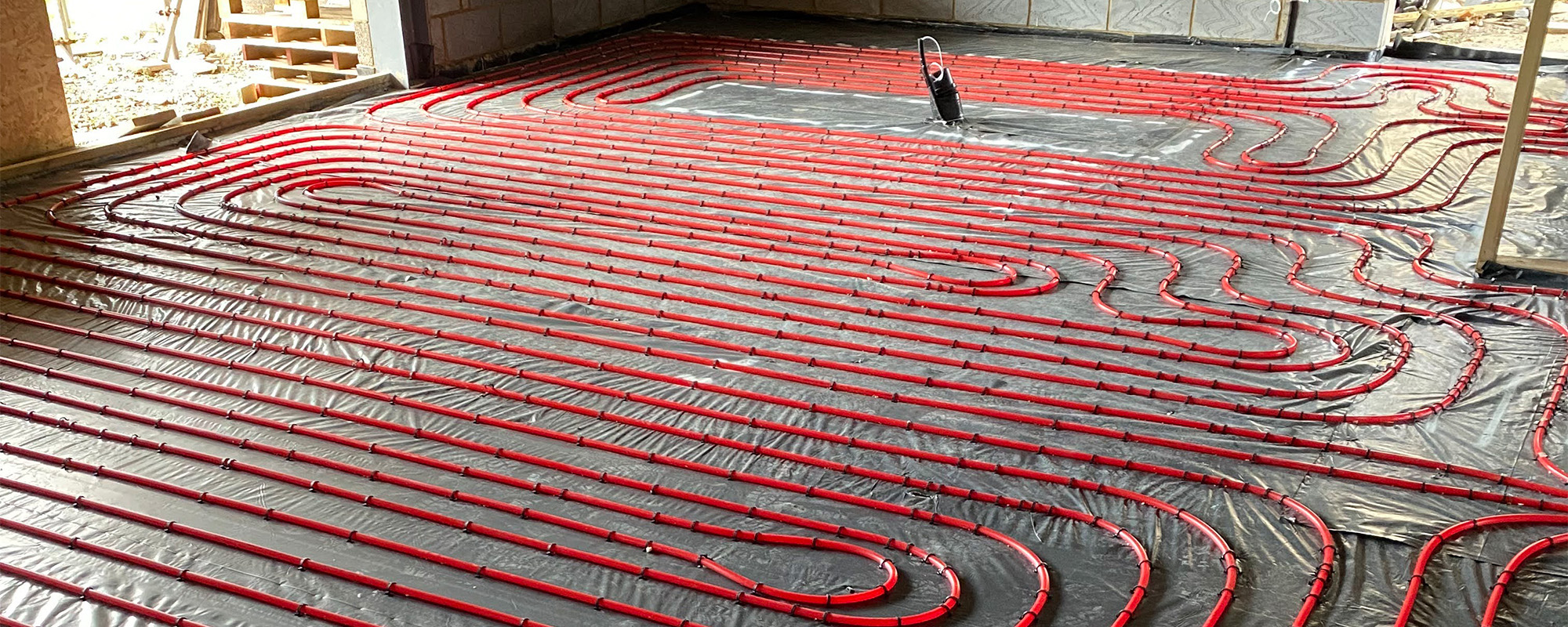
A common pitfall in major renovation or self-build projects is the fragmentation of contractors. When one company installs the insulation, another lays the heating pipes, and a third pours the screed, it creates a high-risk environment for errors and miscommunication. If the final floor finish is uneven or the heating does not perform efficiently, identifying the responsible party can be incredibly difficult. This is why DUO Systems advocates for a single-source approach, managing the entire floor zone from initial design through to final screeding.
Managing the full floor zone means that every layer is engineered to complement the next. The damp proof membrane, the thermal insulation, the underfloor heating layout, and the liquid screed are treated as a single, integrated system. This guarantees optimal heat transfer, as the liquid screed flows seamlessly around the pipes, eliminating the insulating air pockets that are common with traditional sand and cement mixtures. A void-free screed ensures that the floor responds quickly to thermostat adjustments, reducing energy waste and maximising responsiveness.
Furthermore, a comprehensive floor zone package provides developers and self-builders with an unparalleled level of risk mitigation. DUO Systems backs its in-house designs with ten million pounds of professional indemnity insurance, offering total peace of mind to our clients. When you choose a single specialist to manage the entire subfloor build-up, you eliminate project delays, ensure strict compliance with building regulations, and achieve a flawless, flat finish that is perfectly prepared for your final floor covering.
Selecting the Right Flooring for Winchester Interiors
The final aesthetic of your floor is just as important as the technology hidden beneath it. Winchester homes often feature premium materials like natural stone, reclaimed timber, or high-end luxury vinyl tiles, all of which interact differently with radiant heat. Stone and ceramic tiles are the most thermally efficient options available, as they possess high thermal conductivity and excellent heat retention properties. They warm up rapidly and stay warm long after the heating cycle has ended, making them ideal for busy kitchens, hallways, and open-plan extensions.
Engineered hardwood is another highly sought-after choice that pairs beautifully with floor heating systems Winchester. Unlike solid timber, which is prone to shrinking, cupping, or splitting when exposed to shifting temperatures, engineered wood is structurally stable. Its multi-layered construction allows it to expand and contract safely without losing its shape. When installing engineered wood over underfloor heating, it is vital to ensure the surface temperature does not exceed 27 degrees Celsius, a safeguard that is easily managed using modern floor probes and smart thermostats.
For those who prefer the plush comfort of carpet in bedrooms or lounges, underfloor heating is still an excellent choice, provided the correct products are selected. The combined thermal resistance of the carpet and its underlay must not exceed a tog rating of 2.5 to allow the heat to pass through into the room effectively. By consulting with a floor specialist early in the design phase, you can ensure that your heating system is calibrated to account for your chosen floor coverings, preventing energy from being trapped beneath the floor surface.
Smart Integration and Low Carbon Future Proofing
As the United Kingdom transitions away from fossil fuel boilers and toward renewable energy alternatives, floor heating systems Winchester are becoming an essential component of modern property design. Air source and ground source heat pumps operate at their highest efficiency levels when delivering low temperature water continuously. Because underfloor heating utilises the entire floor area as a giant radiator, it is the perfect partner for heat pump technology, allowing the heat pump to run under optimal conditions and deliver the lowest possible running costs.
Control is another area where modern floor systems excel. Gone are the days of manual dials that offer poor accuracy and zero flexibility. Today, integrated heating systems utilise advanced digital thermostats that allow for precise multi-zone control. This means that every room in your Winchester home can be managed independently based on its usage patterns. You can program the system to keep the kitchen warm during breakfast hours while keeping the bedrooms cool, preventing energy from being wasted on unoccupied spaces.
These smart thermostats can be fully integrated into broader home automation networks, allowing you to monitor and adjust your heating remotely via a smartphone or tablet. Whether you are returning from a walk along the Water Meadows or commuting back from London, you can ensure your home is perfectly warm upon your arrival. This level of control, combined with the long term reliability of high-grade PEX pipework, ensures that your investment will provide trouble-free comfort for decades to come.
Floor Heating Systems Winchester Frequently Asked Questions
Can underfloor heating completely replace radiators in an old Winchester home?
Yes, in the vast majority of cases, underfloor heating can act as the sole source of heat. To achieve this in an older property, we perform rigorous heat loss calculations to determine the exact heat requirement of each room. If a room has exceptionally high heat loss, we can adjust the pipe spacing or use a high-output system to ensure it remains warm without needing supplemental radiators.
How long does it take to install a complete floor system?
The installation timeline depends heavily on the project size and the specific system chosen. A standard residential extension might take two to three days for the pipework and insulation, followed by a single day to pour the liquid screed. A full house install will take longer, and you must also factor in the necessary drying time for the screed before the final floor coverings can be laid.
What happens if a pipe gets punctured or damaged under the floor?
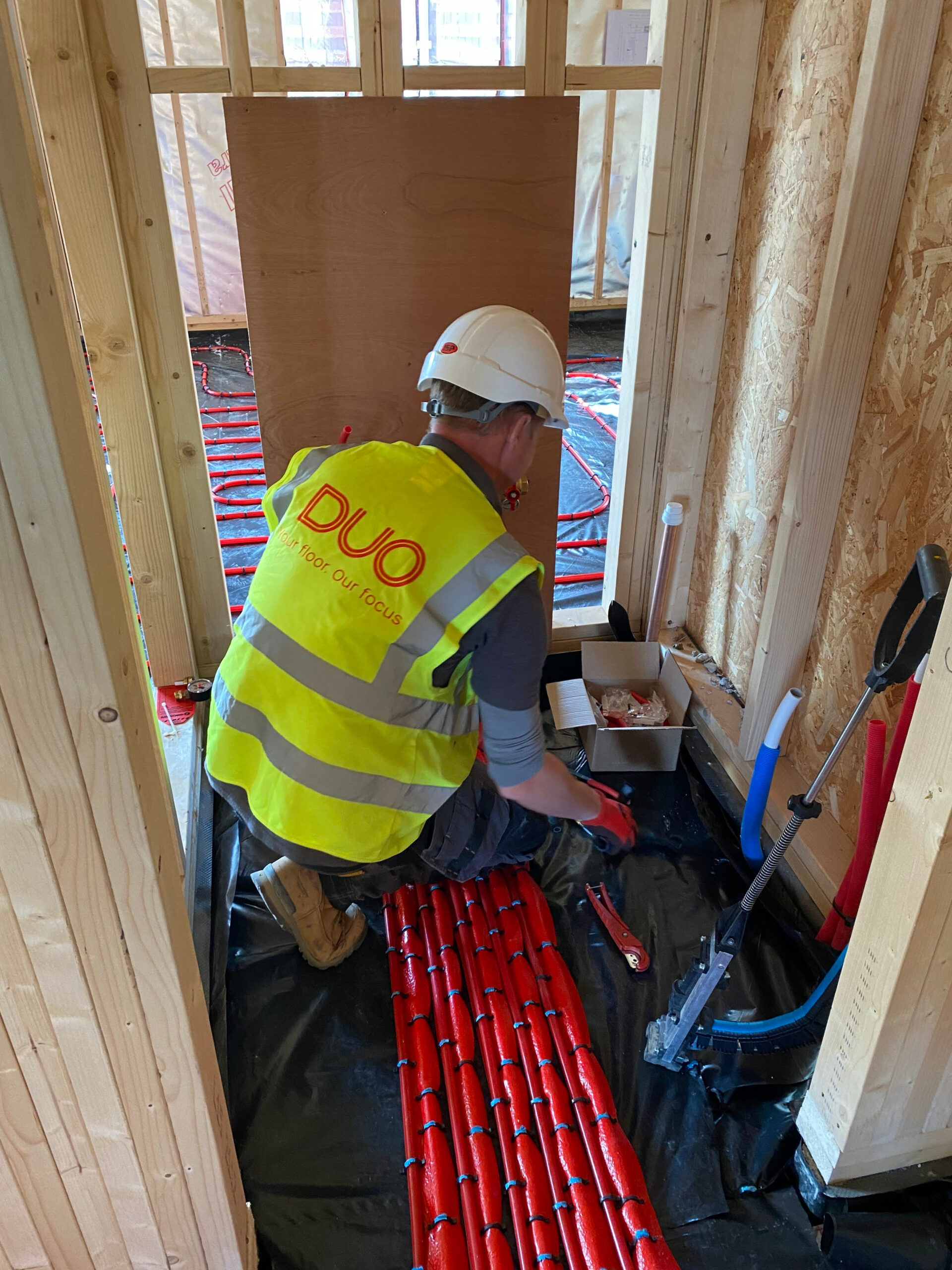
This is an incredibly rare occurrence because the pipes used in floor heating systems Winchester are made from highly durable, multi-layer composite materials designed to last for over fifty years. Furthermore, they are installed in continuous loops with no joints hidden beneath the floor. If accidental damage does occur, such as a contractor drilling into the screed, the exact location can be identified using thermal imaging cameras, and a localised repair can be executed.
Is liquid screed better than traditional sand and cement for underfloor heating?
Yes, liquid screed offers significant advantages over traditional mixtures. It has a much higher thermal conductivity, meaning it transfers heat from the pipes to the room far more efficiently. It can also be poured at a thinner depth, which improves the response time of the heating system and helps to keep the total floor build-up to a minimum.
Are floor heating systems expensive to run?
Generally, an underfloor heating system is between 15% and 20% more efficient to run than a traditional radiator system. This is due to the lower water temperatures required and the more efficient distribution of heat. Your actual running costs will depend on your property’s insulation levels, your primary heat source, and how effectively you use your zone thermostats.
Can I use smart home tech like Nest or Hive with my floor heating?
Yes, modern underfloor heating manifolds and wiring centres are fully compatible with smart home technology. We can install smart thermostats that integrate with systems like Apple HomeKit, Google Home, Nest, or Hive, allowing you to manage your home heating through voice commands or automated schedules.
To talk through your project, get in touch with us.
Share This Story, Choose Your Platform!
About DUO Systems